Difference Between Common Law and Civil Law
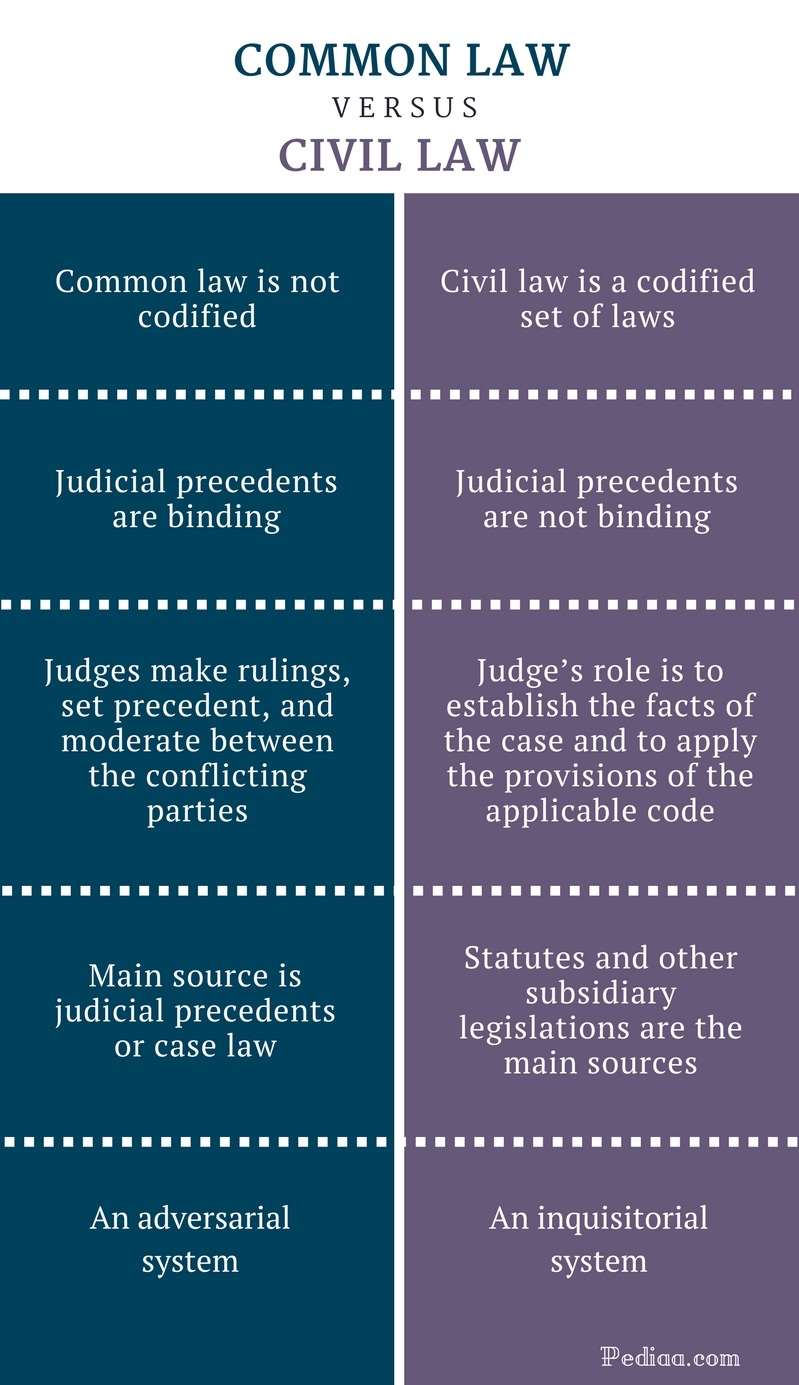
What is Common Law and Civil Law? Common Law is a legal system where court judgments and case precedents play a crucial role in legal interpretations, whereas Civil Law is a codified legal system where statutes and legal codes are the primary sources of law.. Introduction: Common Law vs Civil Law. Common Law vs Civil Law: The legal systems of the world are predominantly divided into two.
Common Law Vs Civil Law PowerPoint Template PPT Slides
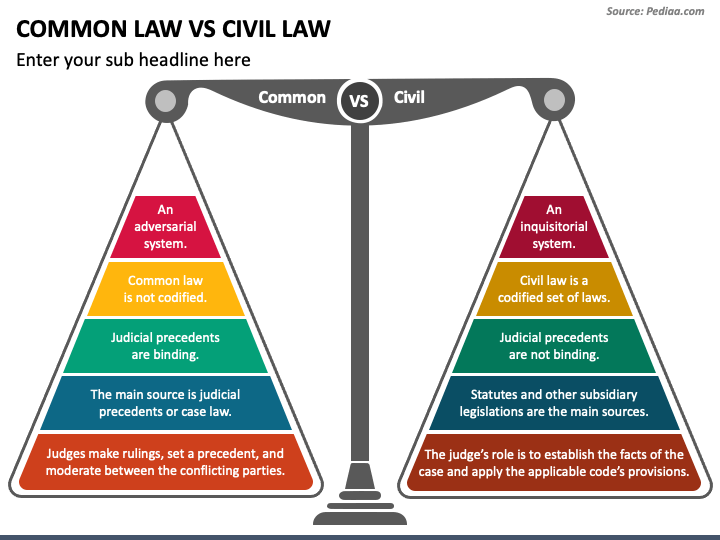
Civil law is based on written codes and statutes, whereas common law relies on judicial decisions and precedents. In civil law, judges primarily interpret and apply the law, while in common law, judges have the authority to create new legal principles through their rulings. Most European countries follow the civil law system, while common law.
Understanding Common Law vs. Civil Law EdrawMind
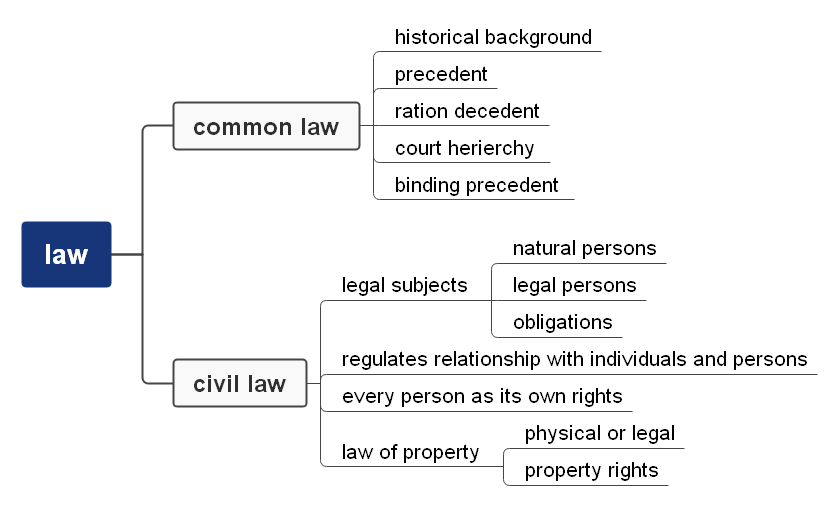
Note that before discussing different law systems, it is important to distinguish between what the term civil means in the context of legal systems and what it means in terms of civil versus criminal laws.. Common Law Systems. The US legal system, and other legal systems that emanate from British rule, is a common law system. 44 Originally, common law meant judge-made law that filled in gaps.
[Solved] Complete the table below on common law system versus civil law... Course Hero
Systems of Common Law vs. Civil Statutory Law. Systems of common law and civil statutory law differ in many ways. Rulings in a common law system rely heavily on prior decisions made in similar cases. Rulings in a statutory law system are based primarily statutory laws. This makes the method by which laws are developed and enacted.
Diferencias Entre Common Law y Civil Law PDF Ley común Caso de ley

Civil law is a legal system, influenced by the sixth-century Justinian Code. Civil law predates common law, which is used throughout the United States. The U.S. legal system divides offenses into two categories: criminal and civil. Civil offenses are legal disputes that occur between two parties. Civil law and criminal law differ in key aspects.
Common Law1 Introduction COMPARISON COMMON LAW versus CIVIL LAW SYSTEMS System Features
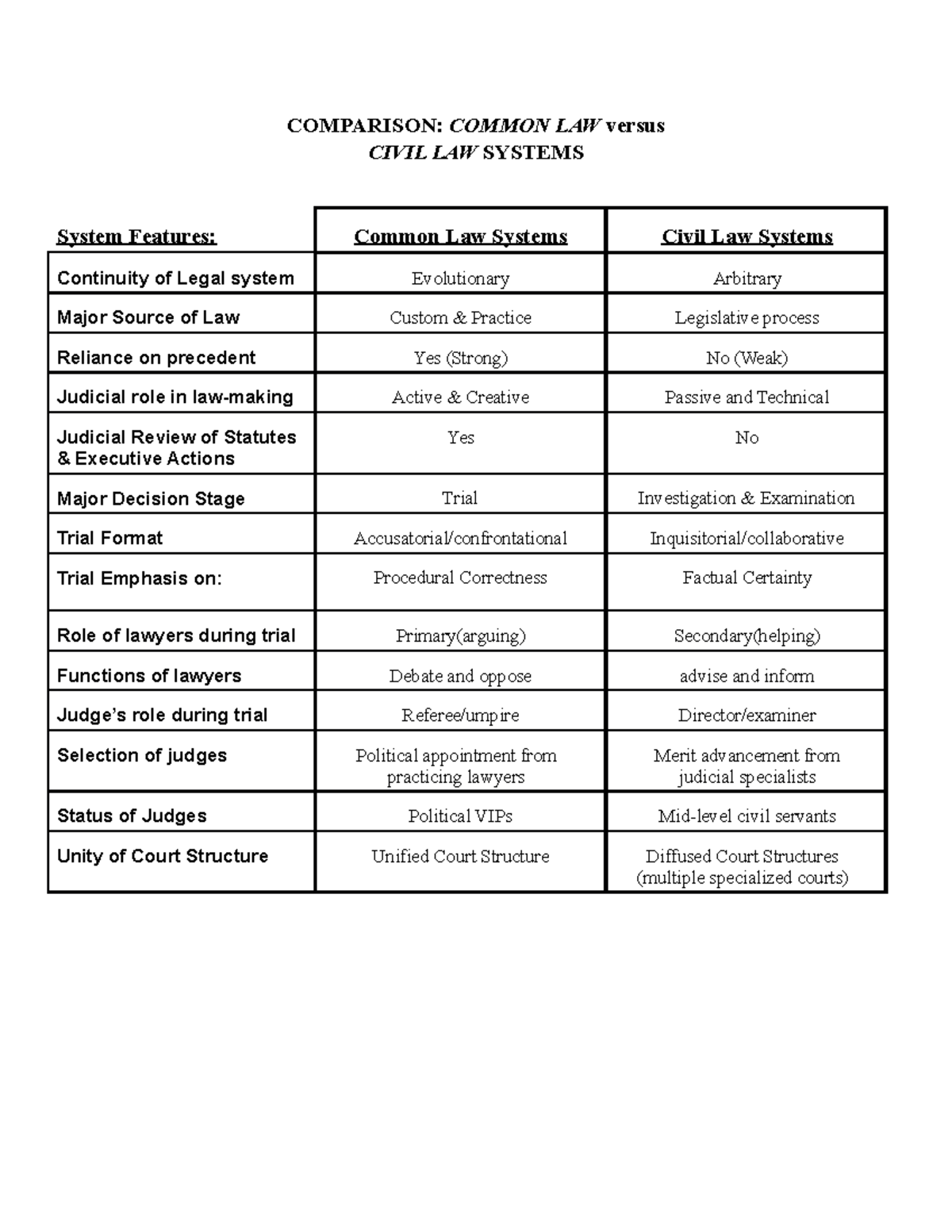
The Legal Information Institute defines common law as "a law that is derived from judicial decisions instead of from statutes." Where civil law utilizes legislation designed to cover every eventuality, common law uses judicial interpretation to apply the written law to specific situations. Common law systems are adversarial, instead of investigatory, with the judge moderating between two.
Civil Law e Common Law o que é e quais as diferenças?
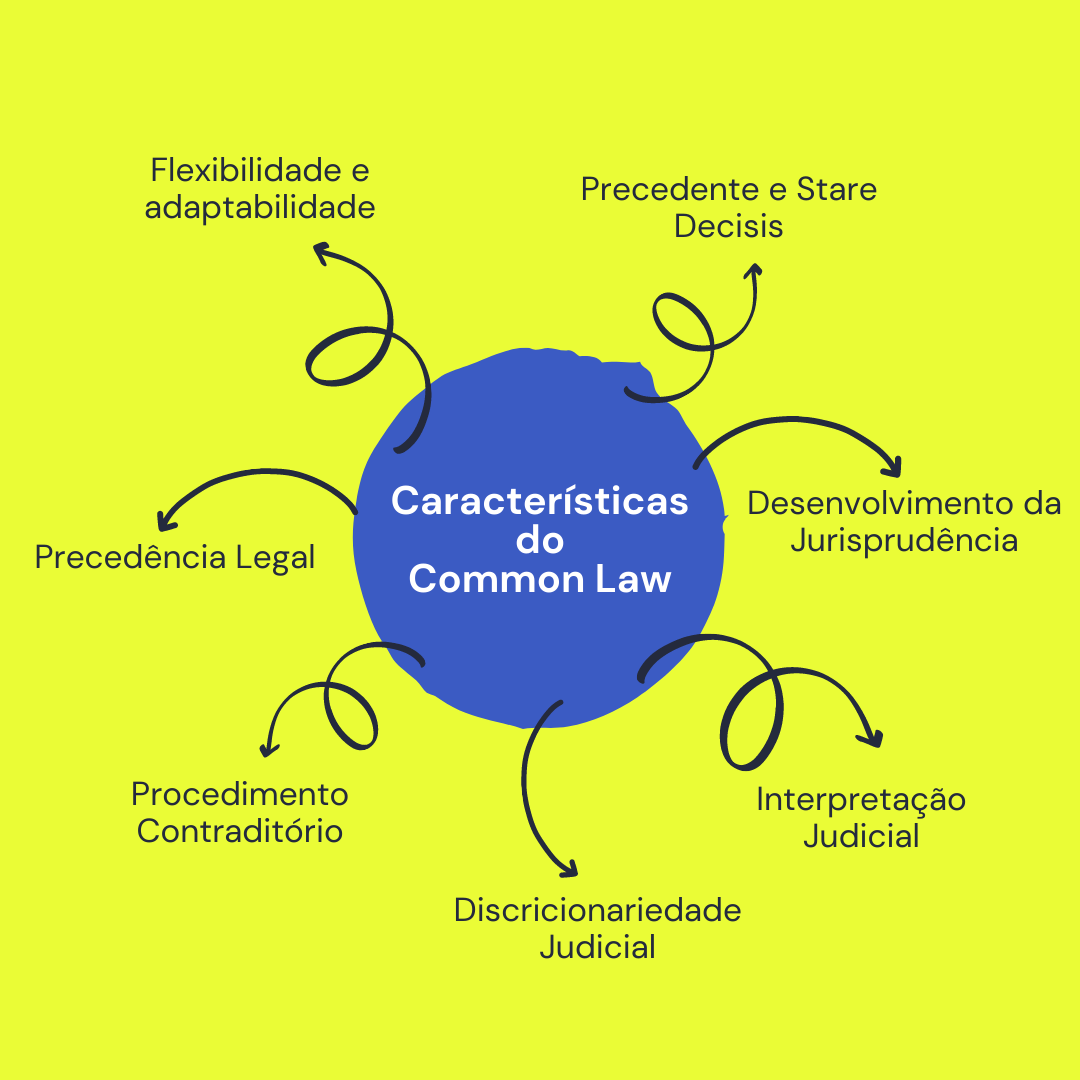
Common law is a body of unwritten laws based on precedents established by the courts. Common law influences the decision-making process in novel cases where the outcome cannot be determined based.
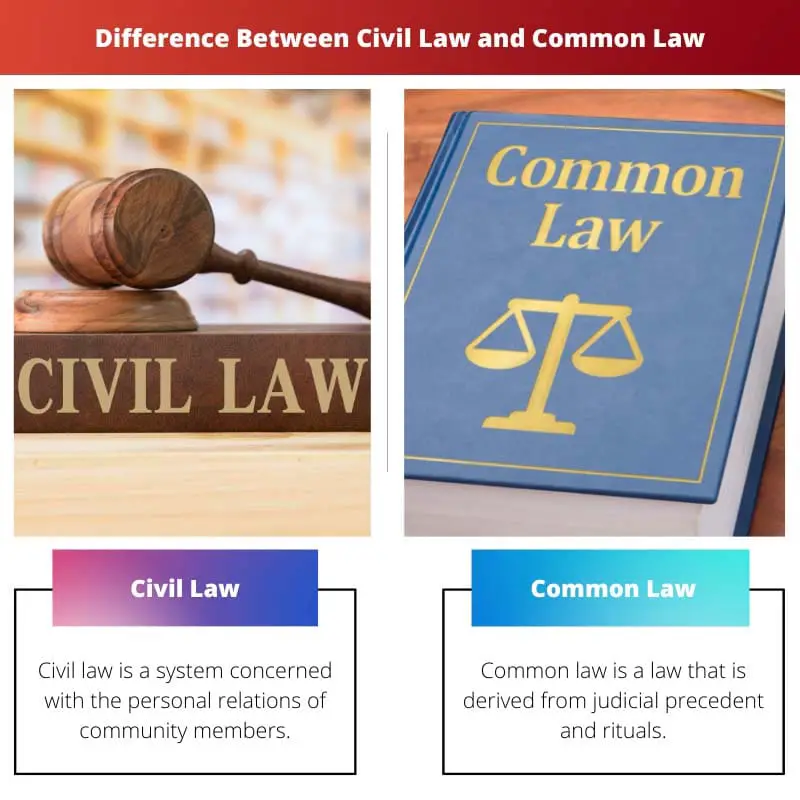
Civil Law vs Common Law Difference and Comparison
5. Evidence. There are, of course, many differences between civil and common law jurisdictions surrounding how evidence is presented in litigation. This might include the admissibility of affidavitsin civil law, or how the discovery process works. A key difference in civil law is that, as the judge acts as the main investigator, court-ordered.
The Differences between Civil Law and Common Law YouTube

Countries following a common law system are typically those that were former British colonies or protectorates, including the United States. Features of a common law system include: Generally, everything is permitted that is not expressly prohibited by law. A common law system is less prescriptive than a civil law system.
Civil Law vs. Common Law What's the Difference (With Table)
gal traditions: common law or civil law. The common law tradition emerged in England during the Middle Ages and was applied within British colonies across continents. The civil law tradition developed in continental Europe at the same time and was applied in the colonies of European impe-rial powers such as Spain and Portugal. Civil law
CIVIL LAW AND LEGAL SYSTEM The Lawyers & Jurists

Common law places much less of an emphasis on precedent than it does on the actual codification of the law. Civil law systems rely on a large legal code that is constantly updated and which establishes legal procedures, punishments, and what can and cannot be brought before a court. In a civil law system, a judge merely establishes the facts of.
PPT The common law system PowerPoint Presentation, free download ID654768
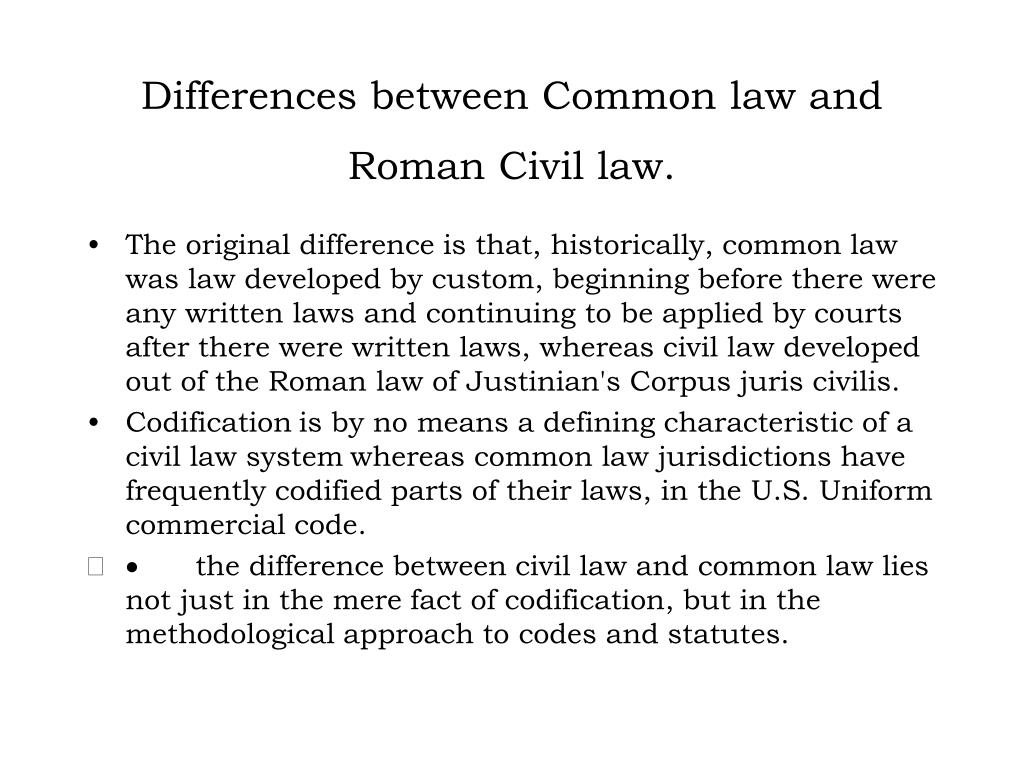
Common law gives judges an active role in developing rules; civil law is based on fixed codes and statutes. Jul 17th 2013. By S.B. IN THE summer of 2013 British royalists were eagerly awaiting the.
Common Law Vs Civil Law & Sources PDF Precedent English Law

The simplest definition for common law is that it's a "body of law" based on court decisions rather than codes or statutes. But in reality, common law is often more complicated than that. At the center of common law is a legal principle known as stare decisis, which is a Latin phrase that roughly means "to stand by things decided.".
Common Law vs Civil Law A Comparative Study of Legal Systems Legal For Creatives

The civil law system is code-based. The law-making body seeks to address specific areas of law through statute or codified rules. When a case comes before a court, the judiciary is charged with interpreting the codified rules when applying those rules to the facts of the case. This process is similar to that of the common law system.
What is the Difference Between Civil and Common Law Differny
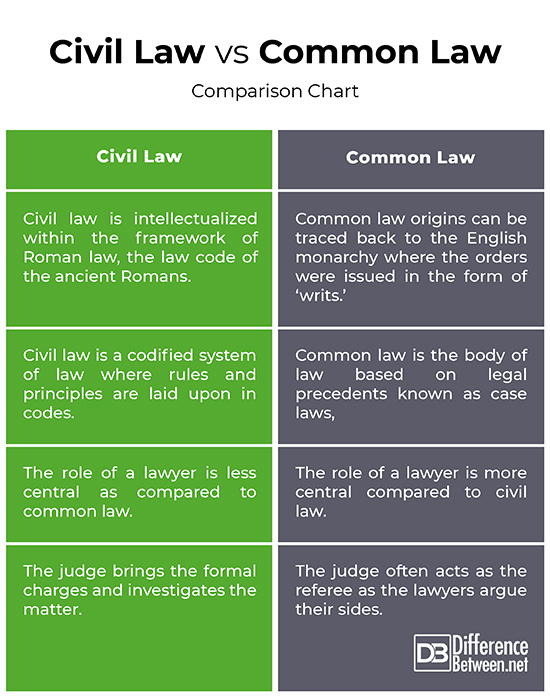
In conclusion, Civil Law Systems and Common Law Systems have distinct attributes that shape the way laws are created, interpreted, and applied. While Civil Law Systems rely on codified laws and legal codes, Common Law Systems are based on case law and judicial precedents. Judges in Civil Law Systems apply the law as written, while judges in.
Common Law v. Civil Law YouTube
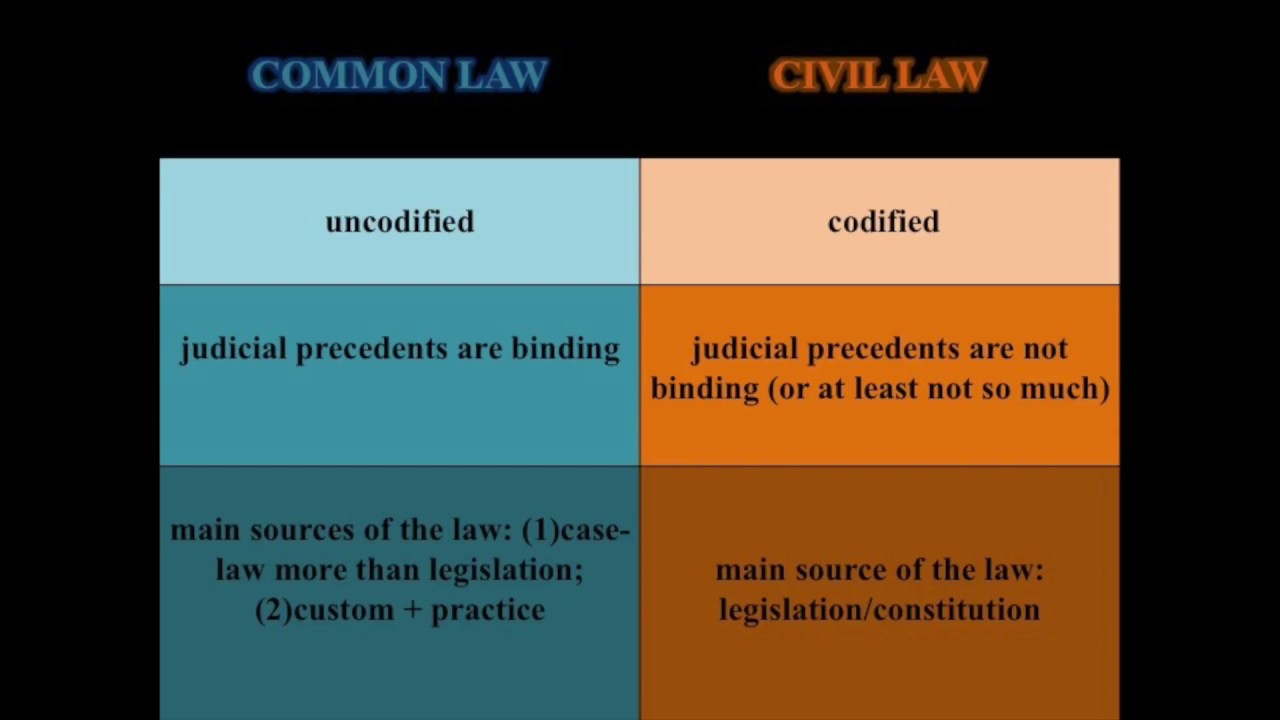
Comparison Between Civil Law and Common Law: Generally. The common law and civil law systems are the products of two fundamentally different approaches to the legal process (Pejovic 2001, 820). They might have more similarities than differences, but a comparison tends to focus on differences.
.